
To Pee or Not to Pee: How TIEEDI Rewilded a Football Field
What do children need the most, other than safety?
They need a place to get muddy, to fall and get back up, and to learn the world with their hands and feet.
In most spaces, that birthright is shrinking. Community parks have turned into fenced-off plots of rubble. Streets that once held hopscotch grids and makeshift wickets now hold rows of parked cars. In really congested cities, children invent games in the negative spaces between potholes and honking traffic, their childhoods pressed thin against concrete.
Returning to an Old Ground
When TIEEDI’s founder, Utsow Pradhan, went back to his alma mater, Goethals Memorial School, the first thing that rushed in was the sound. The pitch still rang with the same football shouts, the same teasing nicknames, the same tiny rivalries that make a playground feel like its own country. The ground, however, hadn’t changed. It was still the same hard, barren field he remembered tripping over as a child.
Perhaps the institution assumed children would simply make do. Perhaps there was no awareness of what a grassless patch in an otherwise green landscape is actually saying. For a piece of land in a forested landscape to remain bare for decades, something in the balance had already been disturbed.
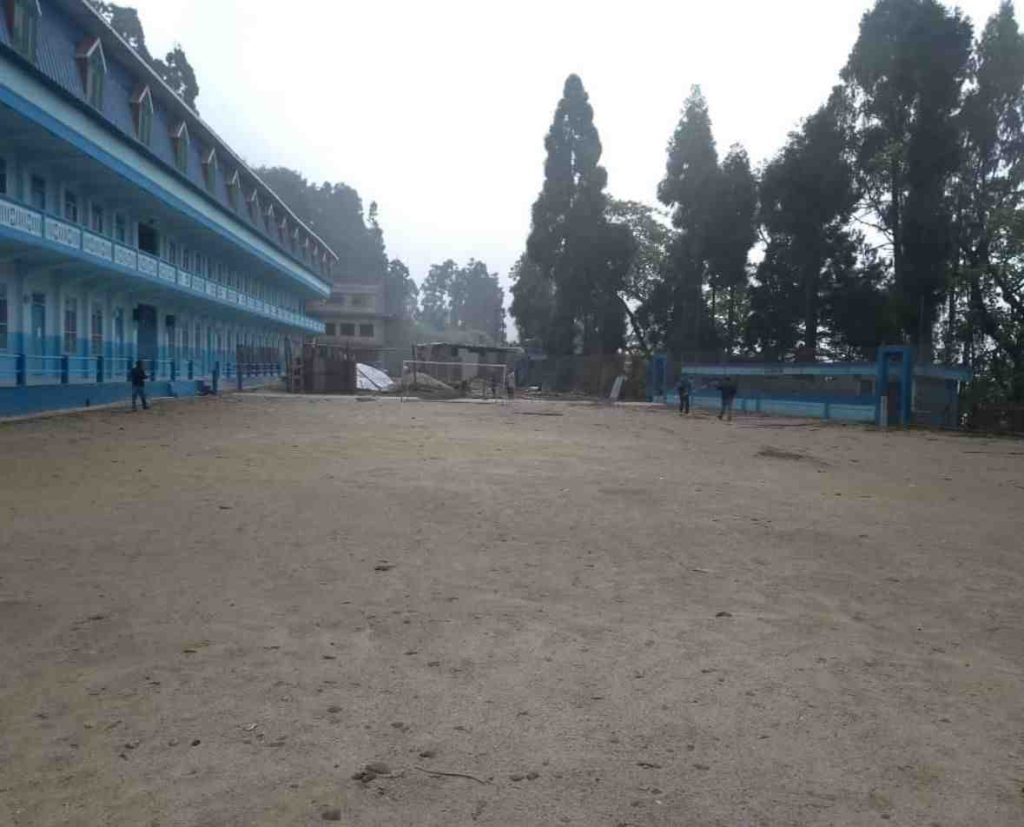
The barren football ground
One of the most unorthodox interventions that followed was the rewilding of this very football ground, which had stayed more or less barren for close to a century. And if you’re picturing polite rewilding, with seed balls and photo-opportunities, you are in for a surprise.
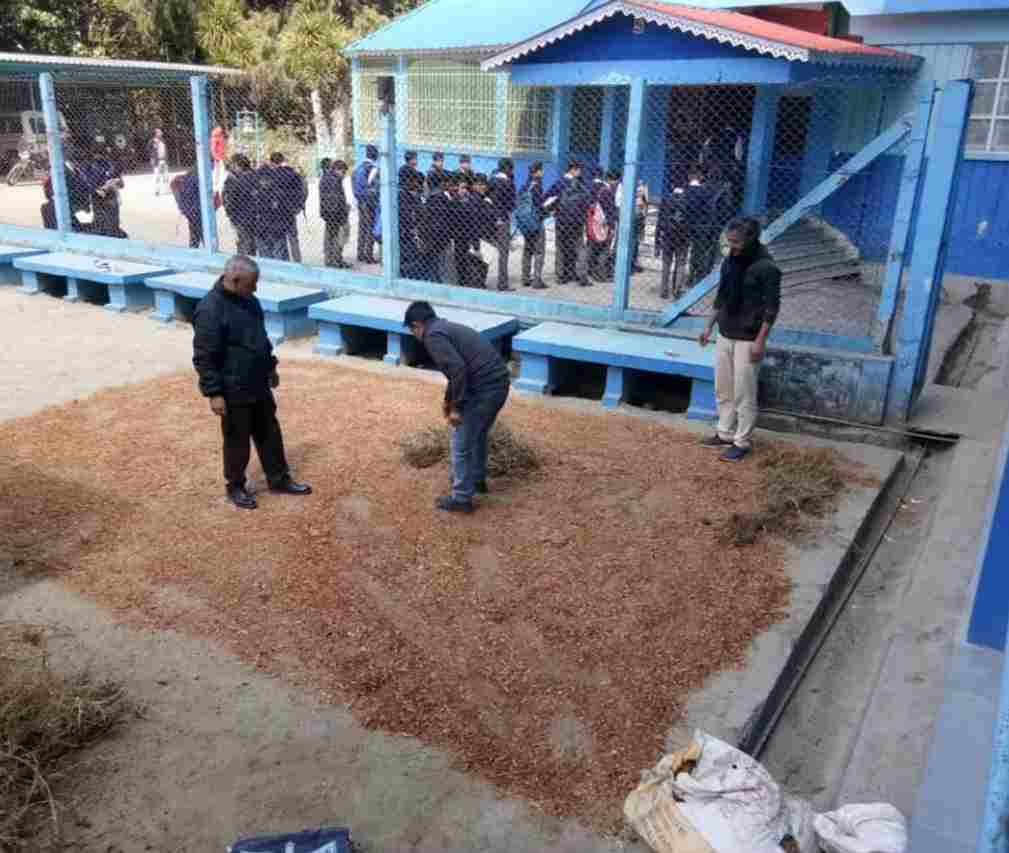
Where it all began, experimenting with a small patch of land
A small patch of earth was first chosen as an experiment. Instead of tilling, the process followed a permaculture-inspired, no-till approach that mimics how nature herself builds soil. Dry, carbon-rich matter was introduced into the ground and then covered with a layer of hardy, local grasses. A nutrient-rich liquid concoction was poured in to wake the soil up.
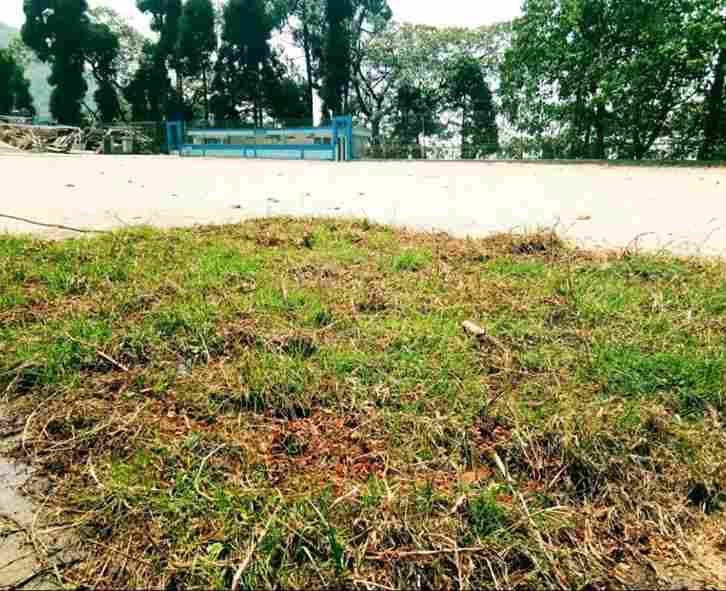
Grass layered on wood shavings and topped with TIEEDI’s special nutrient soup
The grass on that pilot patch was tended to like a child: given liquid food and dry organic matter so the soil ecosystem could slowly learn to “feed” itself. Once that patch responded, the same method was patiently replicated across the ground, each section finally dusted with a sprinkling of organic black gold.
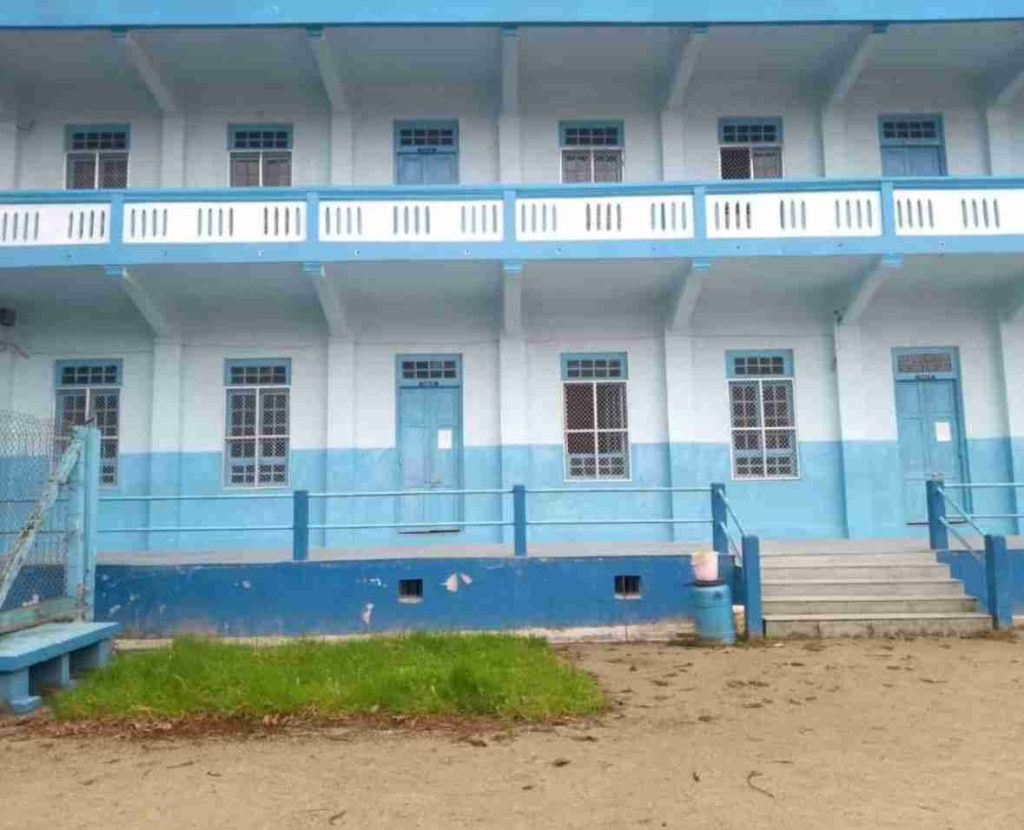
The grass caught on in one patch, eureka!
But when land has been barren for over 70 years, it needs more deliberate encouragement for life to return. Man-made chemicals were strictly off the table.
A Radical Attempt at Rewilding
The idea that finally worked began with a small, almost comic installation: a pee pod in the field. The staff locked-in at the campus during COVID were also paid a few rupees to use it. Nothing high-tech inside, just a hilarious subversion of a daily habit. Instead of flushing into a septic tank, their urine was collected, diluted, and fed back to the soil.
Human urine is mostly water, but the remaining fraction is loaded with nitrogen, potassium, and phosphorus. The same NPK formula sold in bright, crinkly fertilizer bags. In most homes and institutions, this “liquid gold” is chased away with litres of treated water even in drought-stressed lands. Two precious resources, nutrients and water, lost in the same reflexive flush.
Here, the loop was reversed. The school’s own people became part of the nutrient cycle that the ground had been starved of for decades. Over time, the field responded. Hard earth gave way to the life dormant underneath. Green threads of grass began to inch across the brown. A place that had only ever been tolerated as a rough playing surface started to resemble what it was always meant to be: a living, breathing ground that children could safely fall on.

The infamous pee pod
At One-Fiftieth the Cost
From the outside, it might look like a quirky experiment: paying people to pee so the football field can heal. But the deeper lesson is blunt and simple: there was never a shortage of what the land needed. Only a shortage of imagination about where value begins and where waste ends.
The field also came back to life at roughly one–fiftieth the cost of a plastic astro turf. And because it was real grass, not green plastic, it went to work in ways a turf never could. It doubled as a rainwater harvester during the monsoon, replenishing groundwater. Grass also held the land together and eliminated dust that filled childrens’ lungs, reducing the likelihood of respiratory illnesses.
If a single football ground can be brought back to life with urine and local biomass, then the question is no longer whether regeneration is possible. The question is whether we are willing to stay with the land long enough to pay attention and feed it what it needs to grow.
Footnote: It is unfortunate to report that the field has reverted to bare, compacted soil. Not because the method failed, but because attention did. Projects like this do not run on innovation alone; they run on daily guardianship. When that lapses, the land does what it has been forced to do all along: it hardens. The least we can do, as humans, is learn to stay vigilant by a land that is begging to be born again.